
How Pressure Tank Capacity Affects System Stability and Equipment Performance
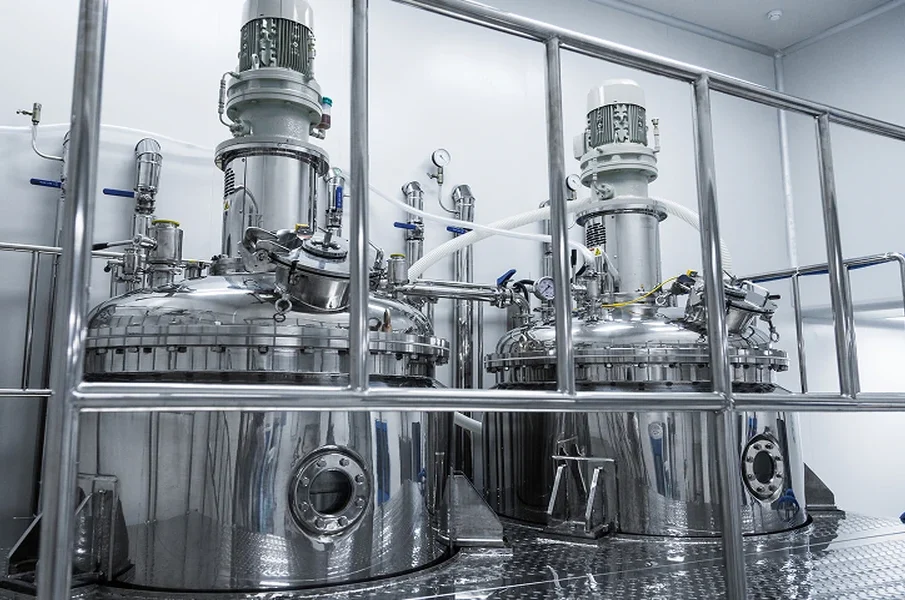
Whether your automated lines apply micro-dots of UV adhesive onto circuit boards or lay down thick beads of silicone sealant across automotive headlamps, fluid consistency dictates your production yield. A single sputtering burst or a momentary pressure drop can ruin an entire assembly run, leading to costly scrap and frustrating machine downtime.
When engineers troubleshoot uneven deposit volumes, they often blame the nozzle, the feed tubing, or the programmable controller. Yet the true culprit often sits right at the supply source. A properly sized pressure tank acts as the steady heart of any fluid delivery system. Pairing the correct reservoir volume with a high-performance dispenser valve ensures a pulse-free flow, protecting your line from sudden pressure crashes.
- Continuous Headspace Buffer – A larger vessel maintains a generous cushion of compressed air, dampening fluid pressure dips during high-speed production cycles.
- Reduced Refill Frequency – Adequate fluid volume minimises the need to open pressurised vessels mid-shift, slashing contamination risks and operator handling errors.
- Steady Viscosity Control – Ample reservoir capacity allows high-viscosity fluids to settle naturally, eliminating trapped micro-bubbles before they reach the output line.
- Protection for Downstream Components – Stable, regulated delivery pressure extends the service life of internal fluid seals and delicate pneumatic actuators.
The Air Buffer Secret: Why Headspace Volume Controls Stability
To understand why capacity matters, look at Boyle’s Law in action. When you pressurise a fluid vessel, the pocket of air sitting above the liquid acts as a mechanical spring. As fluid flows out through the feed lines, that air pocket expands into the vacated space, which naturally lowers the internal pressure unless your air regulator compensates instantaneously.
In an undersized pressure tank, dispensing even a modest amount of fluid rapidly expands that small air volume, triggering immediate pressure drops. Mechanical regulators often lag behind these microsecond pressure shifts. Consequently, the fluid stream stutters, causing noticeable volume variations between consecutive dispensing cycles. Conversely, a vessel with ample headspace absorbs fluid loss effortlessly; the relative change in air volume remains negligible, maintaining a rock-steady delivery pressure straight to your dispensing head.
Protecting the Gatekeeper: Optimising Fluid Supply to the Dispenser Valve
Your nozzle acts as the final gatekeeper on the assembly line, opening and closing thousands of times each hour to place exact fluid volumes. However, even the most advanced dispenser valve cannot compensate for erratic upstream supply pressure.
When supply pressure surges or drops unpredictably, valve shut-off mechanisms struggle to terminate fluid flow cleanly. Fluctuating pressure leads to messy stringing, uncontrolled drooling, and inconsistent dot profiles. Providing a continuous, stable feed from an adequately sized pressure tank ensures that the valve chamber fills with uniform hydraulic force every single cycle. This stability empowers your pneumatic or piezoelectric actuators to snap shut with surgical precision, guaranteeing razor-sharp cut-offs and repeatable fluid beads across every shift.
Bubble Banishment and Viscosity Management: Giving Fluids Room to Breathe
Industrial adhesives, thermal pastes, and optical epoxies trap microscopic air bubbles during packaging, transit, and manual pouring. If these air pockets enter your delivery hoses, they compress under pressure and expand explosively as they exit the nozzle, splattering fluid over delicate assemblies.
Generously sized tanks provide the fluid volume and surface area necessary for effective degassing. Many high-capacity reservoirs incorporate internal mechanical agitators and vacuum-degassing ports. A spacious tank allows thick fluids to sit and degas thoroughly under vacuum before you introduce positive operating pressure. Feeding bubble-free, settled fluid directly into your dispenser valve eliminates intermittent spitting and maintains uniform density from the first deposit of the morning to the final cycle of the night.
The Production Impact: Refill Cycles and Downtime Economics
System capacity directly impacts factory economics and line productivity. Every time an operator stops an automated cell to depressurise a vessel, unclamp the lid, pour in fresh adhesive, and re-pressurise the line, production grinds to a complete halt.
Frequent refill cycles introduce ambient airborne dust into the fluid reservoir, which can clog fine dispensing tips. Furthermore, cycling line pressure repeatedly fatigues pneumatic seals and fittings. Investing in a vessel that holds a full shift’s or an entire day’s worth of fluid eliminates mid-run interruptions. Operators load material once, verify operating pressure, and let the machinery run continuously without costly human interventions.
Size for Stability to Protect Your Margins
In automated manufacturing, process stability separates profitable production runs from costly scrap piles. Sizing your fluid supply vessel correctly is not simply about storage convenience; it forms the baseline for precise pressure regulation, bubble-free fluid transfer, and repeatable nozzle control. By investing in a well-matched fluid vessel that feeds clean, uninterrupted pressure to every dispensing head, you safeguard your equipment, boost cycle repeatability, and maximise production throughput.
Frequently Asked Questions
How do I determine the ideal tank capacity for my dispensing process?
Calculate your total fluid consumption per production shift, and select a vessel that holds that entire volume while still leaving at least 20% to 30% of the tank as empty air headspace.
Can an oversized pressure tank harm dispensing performance?
No, larger tanks improve pressure stability and reduce refills. However, ensure the fluid volume matches the chemical’s pot life or shelf life so materials do not cure or degrade inside the tank before use.
Why does my fluid bead taper off toward the end of a long dispense cycle?
This tapering usually indicates that your tank lacks sufficient headspace air volume or features a restrictive regulator that cannot supply makeup air fast enough to match fluid drawdown.
Contact Unicontrols to explore precision fluid reservoirs and dispensing systems and discover how our engineering solutions can streamline your automated operations.


