
Root Cause Analysis: Common Causes of Fastening Defects in Manufacturing
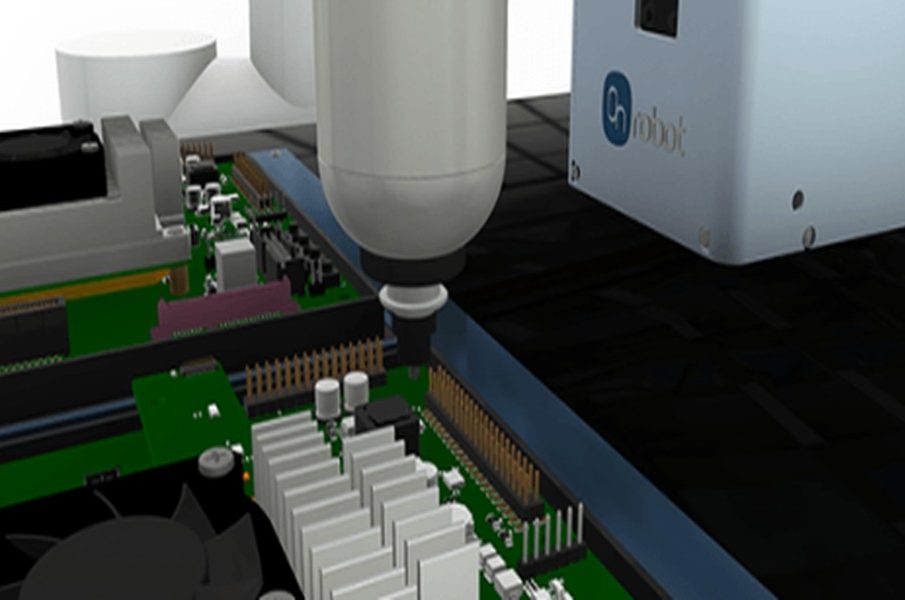
In high-precision manufacturing, assembly lines are only as strong as their weakest joint. For operations managers, process engineers, and executive decision-makers, fastening defects represent an expensive operational vulnerability. A single improperly secured screw can lead to immediate quality control failures, expensive scrap and rework cycles, or catastrophic product failures in the field that damage brand reputation.
Understanding the root causes of fastening defects is critical to transitioning from a reactive troubleshooting posture to a proactive, zero-defect production strategy.
1. Torque and Angle Deviations
The mechanical integrity of a threaded joint relies on achieving the correct clamping force (preload). In manual or poorly calibrated assembly environments, achieving this balance consistently is a major challenge.
- Under-torqueing: If a fastening tool stops short of the engineering specifications, the joint lacks sufficient clamping force. Under operational stress or vibration, these components will inevitably loosen.
- Over-torqueing: Conversely, applying excessive torque stretches the fastener beyond its yield point, stripping the internal threads or shearing the screw head entirely.
Traditional slip-clutch tools only measure torque, which can be deceptive. If a screw encounters a cross-thread or a burr midway through insertion, the tool will register the target torque prematurely, leaving the joint unseated. Modern workflows mitigate this by monitoring both torque and rotation angle simultaneously, ensuring the screw has traveled the correct distance at the correct resistance.
2. Part-to-Part Tolerance Variation and Misalignment
Even when a fastening tool functions perfectly, variances in the parts being assembled can introduce defects. Fastening processes often fail during the initial engagement phase due to subtle alignment errors.
| Error Factor | Manual Assembly | Automated System |
|---|---|---|
| Cross-Threading Risk | High (Fatigue) | Low (Z-Axis Guard) |
| Depth Verification | Visual Estimate | Digital Sensor |
| Data Logging / Trace | None | 100% Automated |
| Cycle Time | Variable | Constant |
If an operator introduces a screw at a slight angle, cross-threading occurs. The thread of the fastener cuts across the mating thread, destroying the host material and jamming the fastener before it fully clamps the joint. Furthermore, minor fluctuations in part dimensions or paint thickness can alter the torque profile, tricking standard assembly tools into false-tight readings.
3. Human Factor Variability and Operator Fatigue
Manual screwdriving is inherently prone to variability. Over the course of an eight-hour shift, operator fatigue leads to inconsistent tool positioning, improper downward pressure, and omitted fasteners.
Tactile feedback varies from person to person. One operator may push forward too aggressively, causing the bit to slip and mar the product surface (cam-out), while another may release the trigger too early. This lack of standardization makes root-cause analysis exceptionally difficult, as defects appear randomly across different shifts and production lines.
4. The Solution: Transitioning to Intelligent Automation
Eliminating fastening defects requires decoupling the assembly process from human variability and unmonitored tooling. Integrating smart, collaborative automation into the assembly line provides the precision and data traceability needed to achieve true quality control.
Deploying a dedicated collaborative solution like the Onrobot screwdriver allows manufacturers to tightly regulate the entire fastening cycle. These advanced systems feature built-in torque control and precise axis positioning, ensuring that every screw is picked, aligned, and driven to exact engineering specifications.
Key Advantages of Automated Fastening Tech Stacks:
- Real-Time Error Detection: Intelligent screwdrivers detect anomalies such as cross-threading, stripped holes, or missing screws mid-cycle, halting the process before the sub-assembly moves downstream.
- Flawless Depth Control: By tracking both torque profile and depth simultaneously, the system guarantees that the fastener has reached its final seating position without damaging fragile components.
- Complete Data Traceability: For industries requiring strict quality compliance (such as automotive, electronics, or aerospace), smart automation logs the exact torque and angle metrics for every single joint. This data creates a digital birth certificate for each product, simplifying quality audits and protecting the enterprise from liability.
Strategic Asset Management and Operational Scaling
For operations managers and business owners, investing in automated screwdriving is not merely about replacing manual labor; it is a strategic initiative to optimize asset utilization and eliminate hidden factory costs. Reducing rework rates protects baseline profit margins and maximizes throughput.
By upgrading to a standardized, automated fastening workflow, manufacturers transform a historically volatile assembly step into a predictable, highly reliable asset that supports continuous, high-quality production scaling.


